

Technical
Connecting online & offline – technical “how-to”
A few weeks ago, our CEO Mads-Emil Sýkora Larsen gave a talk on treating offline conversions as if they were online conversions. Since this topic is crucial for businesses aiming to optimise their ad spend and conversion rates holistically, we wanted to share the key insights on how to achieve this from a technical perspective.
Want to know how Tryg proves and optimises marketing spend with this setup?
Why focus on offline conversions?
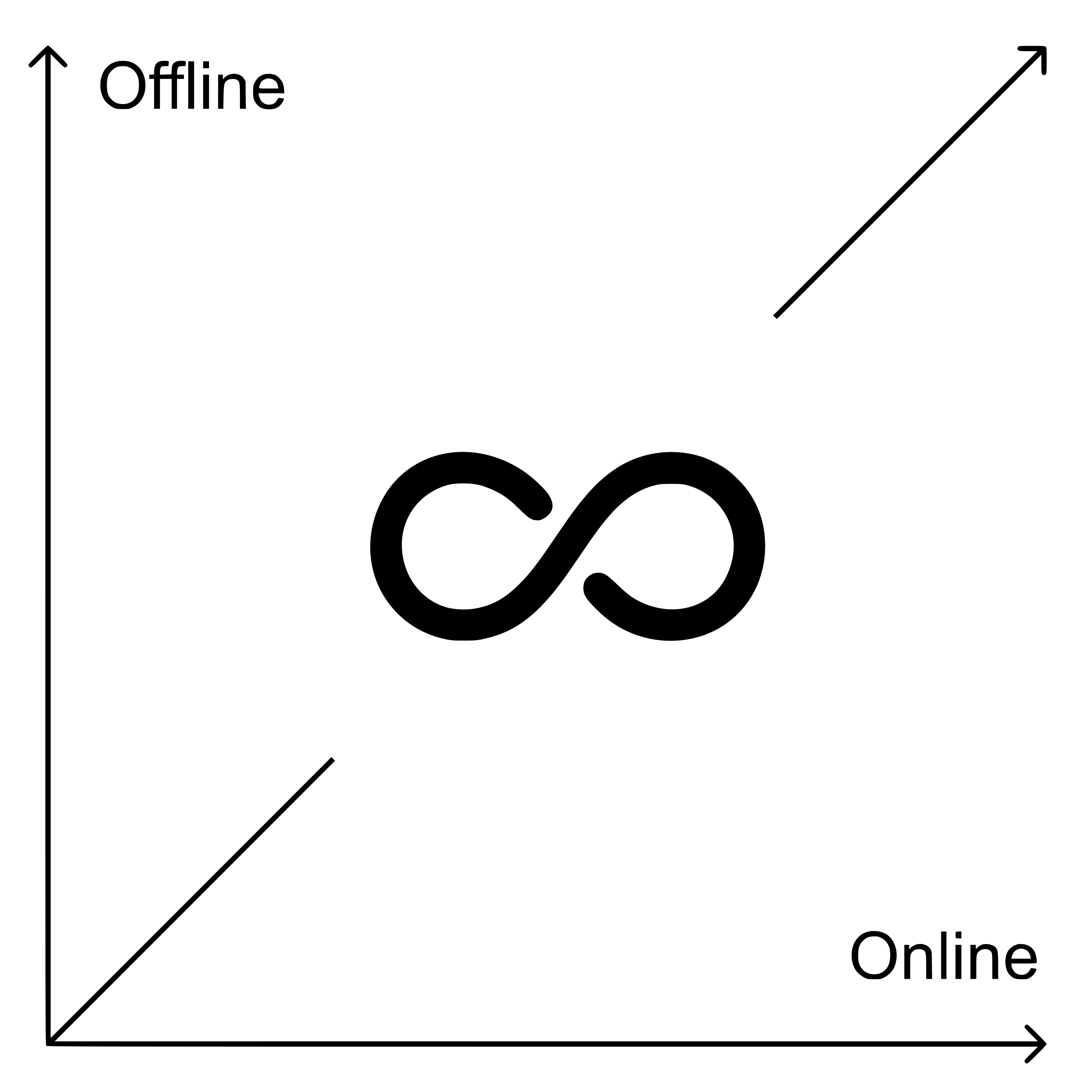
Why spend time tracking offline conversions? The answer is simple: the same reasons you optimise e-commerce conversion rates and ad spend apply to offline conversions as well.
If your sales funnel includes both online and offline steps, optimising only one channel risks biasing your data. Many offline conversions originate from your website – ignoring them means missing out on opportunities for optimisation.
Even if your business operates entirely offline, without tracking offline conversions, one must ask: Are you really optimising your ad spend and conversion rate?
Thanks to better integrations and tracking tools, bridging this gap is now easier than ever.
Creating the feedback loop
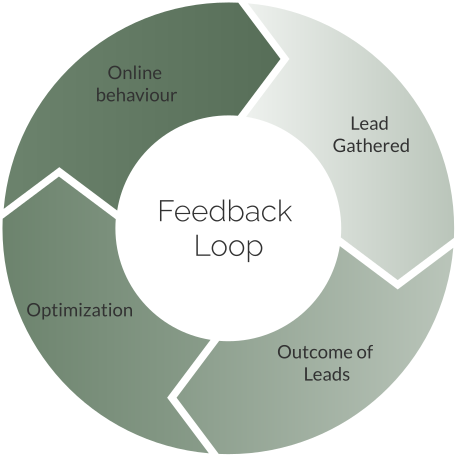
At the core of tracking offline conversions is establishing a feedback loop between online and offline interactions.
To connect online touchpoints (ads + website) with offline outcomes (calls, meetings, sales), you need a method that links these touchpoints.
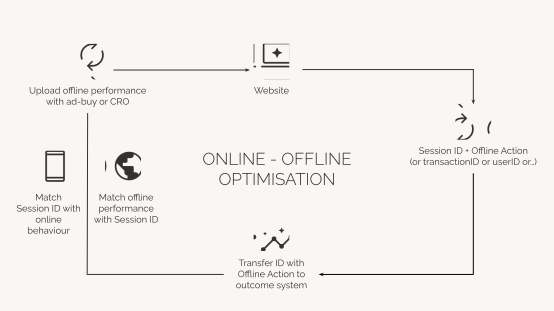
The simplest way to start is form submissions. When a visitor submits a form, meta fields (such as Google Click ID, Google User ID, or Session ID) can be passed along to your internal systems. This allows you to track the user’s journey from ad click to offline outcome. In short, store a “key” or “transaction key” as a meta field in the “offline system” that registers the outcome of the conversation.
By using the “key” you can now stitch the offline outcome with the online user journey. The “online systems” have the online user journey and offline systems have the outcome. The “key” connects them.
Using tools like Google’s Measurement Protocol, you can then feed conversion data back into Google Ads or Analytics for optimisation. Essentially, this works much like tracking email marketing leads – just with additional offline data.
Tackling offline disconnects
One of the biggest challenges in tracking offline conversions is bridging gaps between systems.
For example, imagine an outbound dialer system and a CRM that are not integrated. The simplest way to connect them is by using a unique identifier, such as a phone number. If a form submission includes a phone number along with a Session ID and Ad ID, and your CRM records the same phone number upon conversion, you can link the online and offline journey server-side.
Another challenge is long sales cycles. Google Ads only allows a 72-hour window for attributing conversions. Instead of waiting for a final sale outcome, you can upload an intermediate qualification metric – such as “qualified lead” or “sales-relevant inquiry” – to ensure attribution remains accurate.
Tracking inbound calls
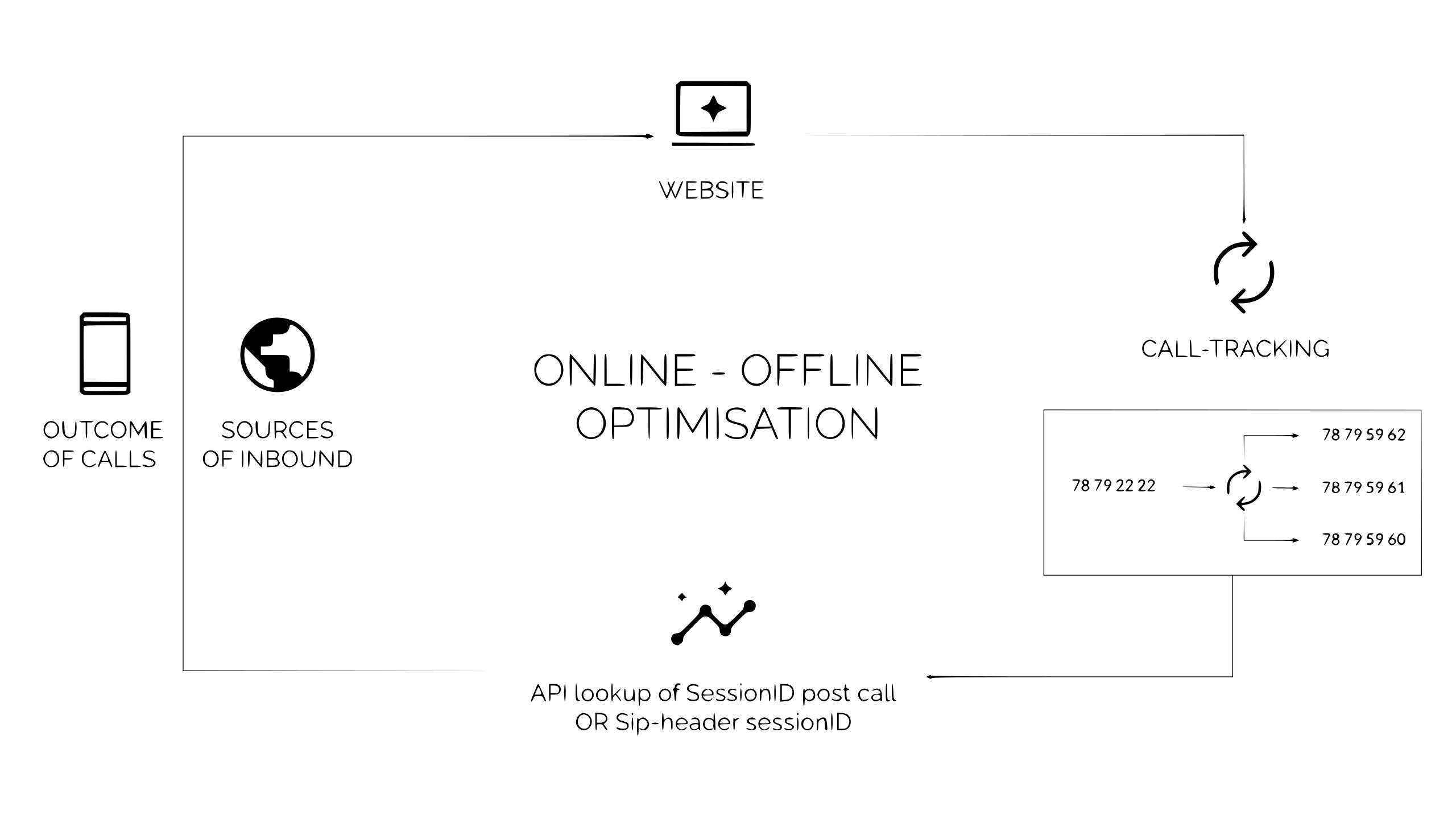
For inbound calls, call-tracking solutions are key. Since you can’t pass online user IDs directly through phone calls, you need an additional API lookup.
Here’s how it works:
- A visitor clicks an ad and lands on your website.
- If they call, the call-tracking system records the caller’s number, online behaviour, and other “online keys” such as a Google Ads Click ID.
- The “offline system” registers the outcome and the customer’s phone number.
- A server-side API lookup matches the customer’s phone number in the call-tracking system with the online user journey.
- This connection allows you to attribute the call to its original online source.
For more advanced setups, you can even forward the Session ID with the call using SIP-header functionality in call centres – though this requires additional technical capabilities.
Conclusion
As AI and automation grow, so will phone calls and voice commerce. However, businesses must be cautious – bad automation (such as ineffective chatbots) can harm lead generation if their performance isn’t measured correctly.
At bmetric, we’ve helped companies – from small businesses to large enterprises – implement these tracking solutions. If you’re looking for ways to connect your online and offline conversions, feel free to reach out.