

Webinar
Connecting online & offline user journeys
Download the presentation on connecting online & offline user journeys
Read our article on the technical aspects of connecting online & offline journeys
What to expect from this webinar?
On this webinar we explore strategies for bridging the gap between online and offline user interactions. While digital automation offers efficiency, personal engagement remains crucial for customer satisfaction and sales performance. The discussion covers commercial and technical considerations, AI-driven optimisation, and the importance of feedback loops in refining customer journeys.
Understanding online & offline user journeys
- Balancing automation with personal interaction is key to optimising customer engagement.
- Online transactions offer efficiency, but offline sales provide higher trust and upsell opportunities.
- Aligning digital and human interactions ensures a seamless user experience.
Businesses increasingly rely on digital channels to automate sales and customer interactions, aiming for seamless self-service experiences. However, while online channels reduce operational costs and improve efficiency, offline interactions often hold greater commercial value. In industries where trust-building is essential or where products are complex, customers still prefer human-assisted transactions. Additionally, providing real-time support through voice or chat-based services ensures customer concerns are addressed effectively, leading to higher satisfaction and increased loyalty. Organisations must strike a balance, integrating both digital convenience and personal engagement to create a smooth and effective customer journey.

Commercial considerations
- Customer intent varies, requiring businesses to tailor digital experiences accordingly.
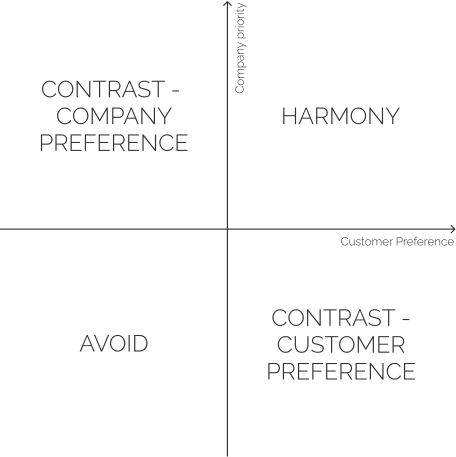
- Channel preferences differ, and businesses must balance cost-efficiency with customer needs.
- Measuring performance ensures channel effectiveness and resource optimisation.
Understanding visitor intent is a fundamental aspect of optimising online and offline interactions. Customers visit websites for a variety of reasons – some seek product information, others require technical support, and many arrive with purchasing intent. Identifying these distinct motivations enables businesses to personalise digital touchpoints more effectively. However, an added complexity arises from differing channel preferences. While businesses might prioritise automated chatbots for cost-efficiency, customers often favour human interaction for complex queries or decision-making processes. Companies must assess whether their preferred channels align with customer needs and adjust accordingly. Moreover, performance measurement – evaluating sales effectiveness, cost per conversation, and first-touch resolution – is critical to ensuring that each communication channel contributes to business success.
Technical considerations
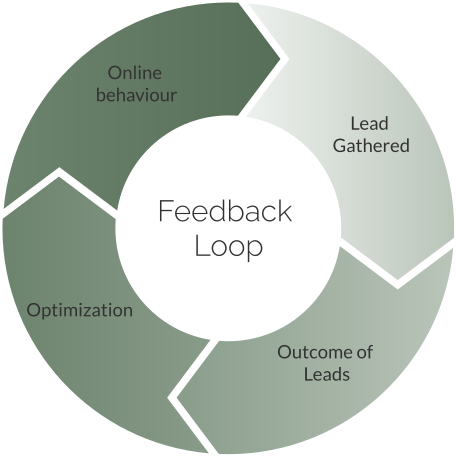
- Feedback loops improve digital experiences by integrating insights from customer interactions.
- Segmenting users based on behaviour enhances targeting and engagement.
- Data maturity evolves from basic analytics to AI-driven insights.
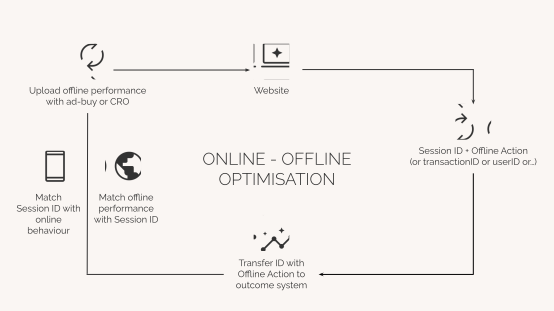
Integrating a structured feedback loop is essential for businesses looking to refine their customer journey strategies. Organisations must leverage data from various sources, including inbound calls, CRM systems, and web analytics, to gain a deeper understanding of customer behaviour. By segmenting users based on their browsing patterns, purchase history, and engagement levels, companies can deliver more relevant content and service options. As organisations progress in data maturity, they move from basic web tracking to sophisticated AI-driven predictions that provide real-time insights. This transition enables businesses to anticipate customer needs, streamline interactions, and enhance overall service quality.
Role of AI in optimising customer interactions
- AI enables large-scale conversation analysis to identify trends and customer pain points.
- Automated insights refine marketing and service strategies by analysing behavioural data.
- Legal compliance is crucial to ensure responsible AI implementation.
Artificial intelligence plays an increasingly vital role in optimising customer interactions across online and offline channels. AI-driven tools now allow businesses to process and summarise customer conversations at scale, providing insights that would be difficult to obtain manually. By analysing recorded sales calls, service chats, and customer feedback, organisations can refine their messaging, enhance ad targeting, and improve website content. These AI-driven optimisations not only help businesses enhance customer experience but also drive conversions by addressing common objections and concerns proactively. However, companies must be mindful of data privacy laws and ensure that AI implementation complies with regulatory requirements to avoid potential legal risks.

Measurement and validation
- Comparing online and offline sales helps optimise resource allocation.
- Cost analysis is critical for determining channel efficiency and value.
- Customer satisfaction metrics should be assessed across all communication channels.
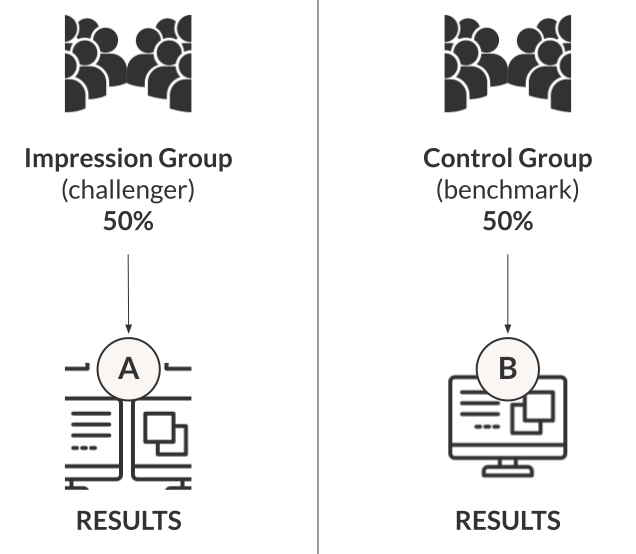
Accurate measurement and validation of performance are necessary to ensure continuous improvement in customer engagement strategies. Businesses should regularly evaluate the effectiveness of different sales channels, assessing conversion rates, revenue impact, and overall customer engagement. While digital channels may offer lower costs, offline interactions can often yield higher-value conversions due to the personalised nature of the engagement. Cost analysis further refines strategy by considering factors like the expense of live support versus automated assistance. Additionally, measuring customer satisfaction across various channels provides deeper insights into overall experience quality. Net Promoter Scores (NPS) and other feedback metrics must be analysed holistically, as negative experiences in one channel can influence perceptions across the entire customer journey.
Implementation strategies
- Start with simple segmentation before deploying advanced data platforms.
- Align customer preferences with available communication channels.
- Optimise digital real estate to present relevant actions at key moments.
Rather than waiting for a fully integrated Customer Data Platform (CDP), businesses should start with basic segmentation techniques and gradually enhance their capabilities. Mapping out customer preferences against available communication channels helps identify areas for improvement, ensuring customers are offered the most effective options at each stage of their journey. Additionally, optimising digital real estate – such as prioritising relevant call-to-action buttons and reducing unnecessary friction – ensures customers can easily access the support or purchasing options they need. A phased implementation approach allows companies to refine their strategy incrementally, maximising efficiency while adapting to changing customer expectations.

Conclusion
- A seamless online and offline experience is crucial for modern businesses.
- Continuous measurement and refinement drive long-term success.
- Leveraging AI and data insights enhances engagement and customer satisfaction.
The webinar reinforced the importance of integrating online and offline customer interactions to create a cohesive and efficient user journey. Businesses must continuously adapt, utilising AI and data insights to refine their strategies while ensuring that human engagement remains a core part of the experience. By balancing automation with personal interaction, tracking key performance metrics, and continuously optimising based on customer feedback, organisations can drive long-term growth and customer satisfaction.